

Take you business next level

Take you business next level
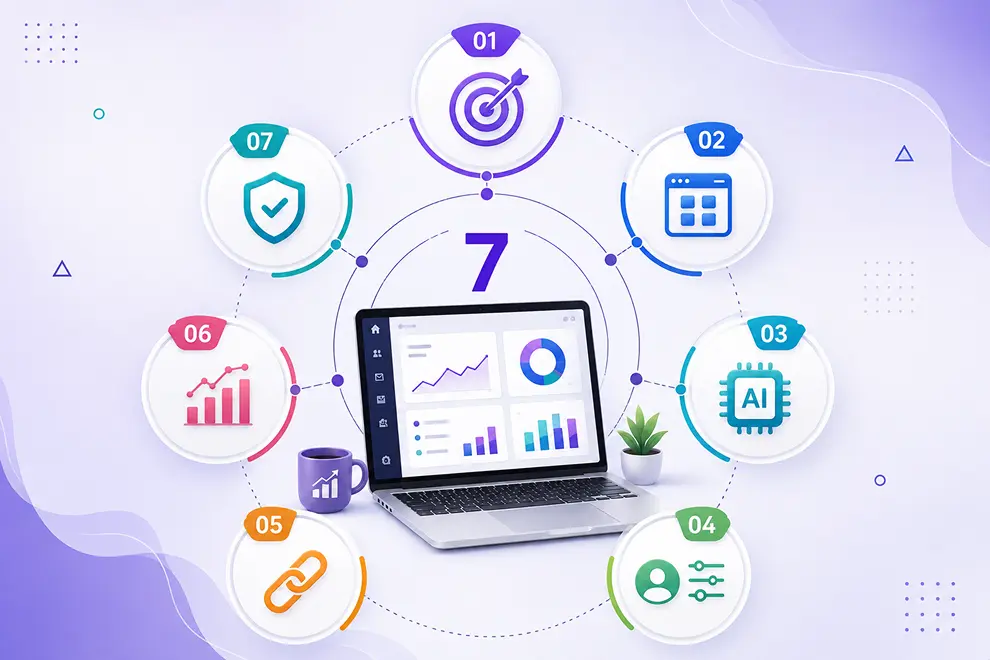
Choosing marketing software requires understanding your goals, customer journey, communication channels, and team requirements. The right platform should help you generate leads, personalize campaigns, automate repetitive work, and measure marketing’s contribution to business growth.
When evaluating AI-powered marketing software, confirm that its AI capabilities solve practical marketing problems and work with your customer data, CRM, and existing tools.
Begin by identifying what your marketing team wants to achieve. Clear goals will help you separate essential capabilities from features your team may rarely use.
Your goals may include:
Involve marketing, sales, service, management, and IT teams so the selected software supports the complete customer journey.
The platform should provide the tools required to attract, capture, nurture, and engage customers. Avoid choosing software that supports only one channel if your business plans to manage connected campaigns.
Important features include:
Test how these features work together rather than evaluating each one separately.
AI should reduce manual work and help marketers make better decisions. Ask the software provider to demonstrate AI features using realistic campaign scenarios.
Useful AI capabilities may include:
Also check whether AI usage is limited by credits, which data it processes, and whether marketers can review content or recommendations before they are used.
Marketing software must be easy enough for the team to use consistently. Request a demonstration or free trial and test common activities such as building an email, creating a landing page, segmenting contacts, launching a workflow, and reviewing a campaign report.
The platform should allow teams to customize:
Flexible customization helps the software fit your processes without requiring technical assistance for every change.
Marketing software should integrate with CRM so campaign activity, lead information, sales follow-ups, purchases, and service interactions remain connected.
It should also connect with:
Confirm how data is synchronized, how duplicate records are handled, and whether customer consent and communication preferences update across connected systems.
Marketing software should clearly show how campaigns contribute to leads, conversions, and revenue. Basic metrics such as opens and clicks are useful, but they do not provide a complete view of marketing performance.
Look for reports covering:
AI-powered analytics should help identify patterns and recommend improvements to audiences, content, channels, or campaign timing.
Review the complete cost of the software, including charges for contacts, users, email sends, communication channels, workflows, storage, AI credits, integrations, and customer support.
The platform should be able to support more contacts, campaigns, users, channels, and automation as your business grows. Also review data encryption, access permissions, backups, privacy controls, consent management, and data export options.
Finally, evaluate the available onboarding, migration assistance, documentation, and customer service. Reliable support can be especially important when launching campaigns, connecting data, or building complex automation.
Integrate the tools you use every day and keep your sales data connected in one platform.






Discover how GoFox helps your sales team manage leads, automate follow-ups, and close deals with confidence, all from one intelligent CRM.
Get Started FreeReal feedback from teams who switched to a simpler way of managing customers and projects.
"This CRM completely transformed how our sales team manages customers. Within three months, we increased productivity by 35% and improved team communication significantly."
"Our team finally stopped juggling countless spreadsheets and switched to a cleaner, more efficient workflow solution."
"We moved away from messy manual processes and embraced a smoother workflow that keeps our whole team aligned."
"In just one day, our whole team was seamlessly collaborating and managing projects through a single dashboard."
CRM CRD is a modern CRM platform designed to simplify customer management. It streamlines daily tasks, organizes interactions, automates follow-ups, and helps teams collaborate more efficiently.
"Within just 60 seconds, our complete CRM system was set up and ready for immediate use."
"Our customer response time has improved by 40%, helping us provide faster and more efficient support."