What Is a 360 Degree Contact View and Why It Matters 

A customer calls your support line, already annoyed. They explain their issue, only to be told, “let me transfer you,” and then explain it all over again. Somewhere between sales, support, and marketing, the story of that customer got lost. This happens every day in businesses without one clear place to see the full picture.

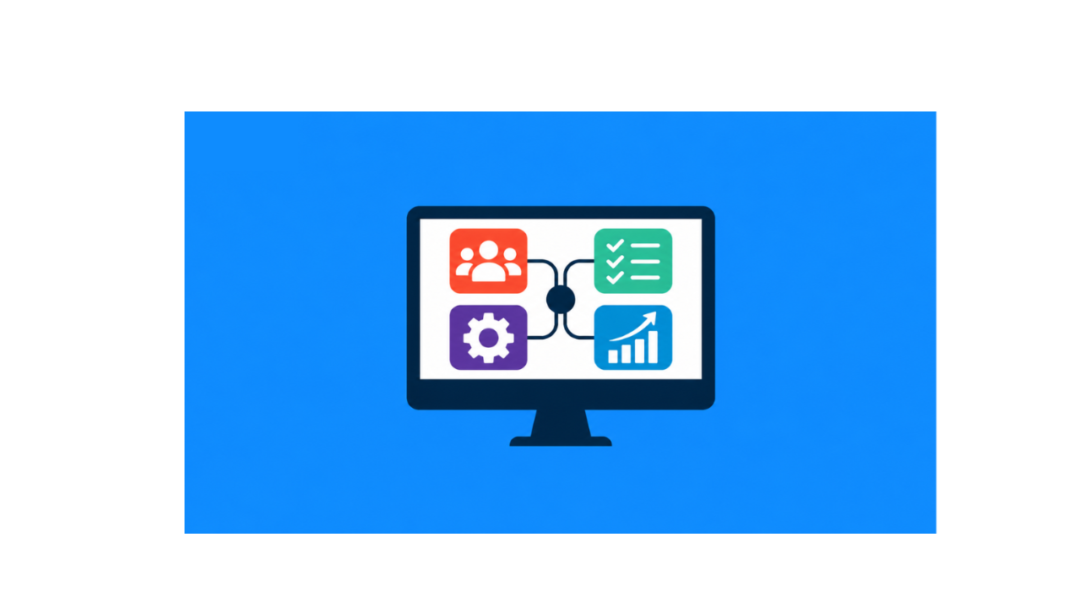
A 360 Degree Contact View is a complete, unified picture of every customer, pulled together from all the places your business interacts with them. It combines emails, calls, purchases, support tickets, and website activity into one single customer view. Your team sees everything in one place, without digging through five different tools.

GoFox’s 360° Contact View, part of the Sales Essentials suite, builds this picture automatically. It replaces scattered spreadsheets and disconnected apps with one unified customer profile that updates in real time.

Why Do Businesses Need Centralized Customer Information?

Businesses need centralized customer information because scattered data leads to missed opportunities and frustrated customers. Customer details living in different systems cost your team time. They end up searching for answers instead of selling or solving problems.

A typical day without centralized data looks like this:

  • Sales checks a CRM for contact details
  • Support checks a helpdesk tool for past tickets
  • Marketing checks a separate platform for email history
  • Nobody has the full picture

Customer data management built around a single customer view puts all of that information in one dashboard. Every team member sees the same facts, at the same time, without switching tabs or asking coworkers for context.

What Does a Complete Customer History Actually Include?

A complete customer history includes every touchpoint a customer has had with your business, organized in one timeline. This typically covers:

  • Contact details and company information
  • Past purchases and deal history
  • Email and call logs
  • Support tickets and resolutions
  • Website visits and form submissions
  • Notes and internal comments from your team

A history in one place lets new team members catch up on a customer relationship in minutes, not days. Nobody needs to ask “has anyone talked to this customer before?” The answer sits right on the screen.

How Does Customer Interaction Tracking Improve Customer Relationships?

Customer interaction tracking improves relationships by showing your team exactly where a customer stands, so every conversation feels informed rather than repetitive. Nobody enjoys explaining the same problem twice to two different support agents.

Proper interaction tracking lets your team:

  • See the last time a customer reached out and why
  • Avoid asking questions the customer already answered
  • Follow up at the right moment, not on a guess
  • Spot patterns, like a customer who contacts support often after a specific type of purchase

Tracking turns customer relationship management from a reactive task into a proactive one. Your team anticipates problems rather than just responding to them.

What Makes CRM Contact Management Different With a Unified Profile?

What Makes CRM Contact Management Different With a Unified Profile?

CRM contact management becomes far more useful when every contact record is unified, rather than split across sales, support, and marketing tools. Traditional contact management often means a name, phone number, and maybe a few notes. A unified customer profile goes much further.

A unified profile connects:

  • Every deal a contact has been part of
  • Every conversation across email, chat, and phone
  • Every support case, open or closed
  • Every marketing email they’ve opened or clicked

A simple contact card becomes a living record of the relationship. Sales reps see if a lead recently filed a support ticket before reaching out with an offer. Support agents see if a customer just signed a new deal before troubleshooting an issue. The context stays visible, every time.

How Does AI-Powered CRM Technology Strengthen the 360-Degree View?

AI-powered CRM technology strengthens the 360-degree view by turning raw customer data into clear, actionable customer insights. Data alone doesn’t help anyone; what you do with it matters.

AI built into the platform lets GoFox:

  • Flag which contacts are most likely to convert
  • Suggest the best time to follow up based on past behavior
  • Summarize long interaction histories into a few key points
  • Highlight customers who may need attention before they churn

These customer insights save time and cut out guesswork. Your team gets the highlights automatically, right where they need them, rather than manually reviewing a customer’s entire history.

How Does a Single Customer View Lead to a More Personalized Customer Experience?

A single customer view leads to a more personalized customer experience because every interaction is informed by everything that came before it. Customers can tell when a business remembers them. They can also tell when it doesn’t.

Full context lets your team:

  • Reference past conversations naturally, without sounding scripted
  • Recommend products or services based on real purchase history
  • Avoid sending irrelevant offers to customers who already bought that item
  • Resolve support issues faster because the history is already visible

Trust builds over repeated interactions like these. Customers feel like they’re talking to one company, not a maze of disconnected departments.

Who Benefits Most From a 360-Degree Contact View?

Who Benefits Most From a 360-Degree Contact View?

Every team that touches the customer relationship benefits, not just sales. A unified customer profile is easy to assume is only useful for closing deals, but the impact spreads much further across a business.

  • Sales teams get full context before every call, so pitches feel relevant, not generic
  • Support teams resolve issues faster because they’re not starting from zero
  • Marketing teams send offers based on real behavior, not guesswork
  • Leadership gets a clearer picture of customer health across the entire business

Small and mid-sized businesses feel this just as much as large ones. Growing businesses often feel the pain of scattered customer data the most, since new hires and new tools keep getting added without a system to tie everything together. A 360-degree contact view solves that problem early, before disconnected data becomes a habit that’s hard to break.

Does a Unified Customer Profile Require Extra Work to Maintain?

No. With the right CRM, a unified customer profile updates itself automatically as interactions happen. This stands as one of the biggest advantages over manual customer data management.

GoFox’s 360° Contact View pulls information in from connected channels as it happens, without asking your team to log every call, email, or ticket by hand. Your team gets:

  • No duplicate data entry across tools
  • No outdated records because someone forgot to update a spreadsheet
  • No gaps in customer history when a team member is out sick or leaves the company

A customer data management system built this way stays accurate without adding busywork to anyone’s day.

What Is a 360-Degree Customer View and Why It Matters

Bringing It All Together

A 360 Degree Contact View isn’t just a nice-to-have feature. It’s the foundation for better customer relationship management, faster support, smarter sales conversations, and a more personalized customer experience at every stage. GoFox’s AI-powered CRM centralizes customer information, giving your team more time to build real relationships and less time searching for context.

Ready to see every customer interaction in one place? Try GoFox’s 360 Degree Contact View today.

Why Customer Service Software Matters for Growing Businesses

Customer expectations have changed. People want fast, consistent answers no matter which channel they use, email, chat, or social media. Managing support manually with spreadsheets and shared inboxes makes that hard. Requests get missed. Response times slip as ticket volume grows. Agents spend valuable time searching for information, leaving less time to solve customer problems.

Customer service software brings conversations, tickets, and customer data into one place. It helps teams deliver reliable customer support at scale, without the manual work that slows everything down.

What Is Customer Service Software?

Customer Service Software is a platform that helps businesses manage, track, and resolve customer support requests in one place. It brings every conversation into one place, giving support teams an organized view of each customer interaction.

Modern platforms use AI and automation to handle repetitive work, sorting tickets, answering common questions, freeing agents to focus on issues that genuinely need a human touch.

How Does Customer Service Software Work?

How Does Customer Service Software Work?
  • Capture requests from every channel automatically
  • Organize and prioritize them into tickets
  • Route each ticket to the right team based on rules you set
  • Automate repetitive tasks like status updates and follow-ups
  • Track every conversation and resolution in full detail
  • Analyze performance data to spot bottlenecks and improve over time

This end-to-end flow removes dependence on an agent remembering to follow up manually or checking multiple tools for updates.

Key Benefits of Customer Service Software

  • Faster response times
  • Higher agent productivity
  • Better Customer Satisfaction
  • Less repetitive manual work
  • Organized conversations in one shared inbox.
  • Consistent support, no matter who handles the request
  • Clear visibility into service performance for managers

Essential Customer Service Software Features

Essential Customer Service Software Features

The right platform combines several tools working together, not one single feature doing all the work:

  • Helpdesk ticketing – Organizes each customer request as a ticket and manages its priority, assignment, and progress from one dashboard.
  • AI chatbot – Answers common customer questions instantly, any time of day, resolving simple queries automatically and cutting down repetitive work for your human agents.
  • Free live chat – Offers real-time messaging for website visitors and customers seeking quick support.
  • Shared inbox – Brings customer conversations from email, chat, and social channels into one unified view. Teams manage and respond without switching between tools.
  • Support workflows – Gives your team a structured process for assigning, escalating, tracking, and resolving customer issues consistently, no matter which agent picks up the ticket.
  • Workflow automation – Automatically handles routine actions like ticket routing, notifications, follow-ups, and assignments, freeing agents to focus on complex customer issues.
  • Ticket labels – Categorizes support requests by type, urgency, or topic, making it faster for agents to organize, prioritize, and locate tickets.
  • HelpDesk Groups – Organizes support agents into teams based on skill or department and routes each request to the right group.
  • SLA Management – Sets clear response and resolution targets for support requests and monitors team performance.
  • Customer self-service portal – Allows customers to search for answers, track the live status of their requests, and resolve common issues independently, without waiting on an agent.
  • Help Center – Provides a searchable library of support articles, guides, and resources for quick self-service assistance.
  • Service Reports – Tracks ticket volumes, response times, resolution times, and agent activity for clear performance insights.

How AI Is Transforming Customer Support

AI is changing how support teams work, not replacing them. It gives customers instant, AI-powered assistance for common questions, and helps teams handle tickets more intelligently by predicting priority and surfacing relevant customer history the moment a ticket opens.

Support workflows now run largely on automation, faster responses, fewer manual steps. The result is a lighter workload for support teams, without losing the human touch where it matters most.

How Customer Service Software Improves Customer Satisfaction

Customers judge support quality by how quickly and smoothly their problem gets solved. Faster first responses, shorter resolution times, and consistent communication across every interaction shape that experience directly.

Personalized interactions, made possible by full access to customer history, add a human touch even at scale. Convenient self-service for simple issues and better support availability across channels round out the experience.

Deliver Customer Support Across Multiple Channels

Deliver Customer Support Across Multiple Channels

Customers don’t stick to one channel, and support software shouldn’t either:

  • Live chat – handles real-time questions from website visitors
  • Shared inbox – keeps email and written conversations organized
  • AI chatbot – answers common questions instantly, any hour
  • WhatsApp bot – meets customers on a widely used messaging app
  • Customer self-service portal – lets people solve issues without contacting an agent

Meeting customers wherever they are, without losing context between channels, makes multichannel support work.

Why Connect Customer Service Software With CRM?

Support doesn’t work best in isolation. Linking your helpdesk with a CRM connects service data to the full customer journey, not just the current ticket. Teams access unified customer information and a complete interaction history in one place.

  • Unified customer information in one place.
  • Complete interaction history across every touchpoint
  • Better collaboration across sales, marketing, and support
  • More personalized customer support
  • Centralized customer communication
  • Sharper insight into how service impacts the customer relationship

How to Choose the Right Customer Service Software

Check each platform against this short list of essentials:

  • Easy-to-use interface your team can adopt quickly
  • Solid helpdesk ticketing
  • Strong AI capabilities
  • Workflow automation
  • Live chat and messaging
  • Shared inbox
  • SLA management
  • Self-service tools
  • Service reporting
  • CRM integration

Customer Service Software Best Practices

Good software is half the equation — the way a team uses it matters just as much. A few habits keep support consistently strong:

  • Build clear support processes
  • Define response and resolution targets
  • Automate repetitive support activities
  • Keep tickets organized with labels and groups
  • Maintain an updated help center
  • Offer self-service options
  • Track customer satisfaction consistently
  • Review service reports regularly
  • Use AI alongside human agents, not in place of them

How GoFox Helps Improve Customer Service

GoFox brings the pieces above into one connected platform built for growing support teams. It centralizes customer conversations, organizes support requests, and automates repetitive service activities for greater agent focus.

  • Provides AI-powered assistance for common questions
  • Connects live chat with the rest of customer communication
  • Enables customer self-service to reduce simple requests
  • Tracks support performance through built-in reporting
  • Keeps service teams linked to the same customer data used by sales and marketing

This connected approach gives agents the full picture, from a customer’s first inquiry to their most recent purchase, without switching between separate systems.

Why Customer Service Software Matters for Growing Businesses

 Conclusion

Customer service software helps businesses manage conversations, support tickets, AI-powered assistance, automation, live chat, self-service, and reporting from one connected platform. Bringing these tools together lets support teams respond faster, work more efficiently, and provide a consistent experience across every customer interaction.

With GoFox, businesses can simplify customer support, automate repetitive tasks, and keep customer conversations organized in one AI-powered CRM.

Ready to improve your customer support? Get started with GoFox today.

How AI-Powered Sales CRM Helps Businesses Close More Deals

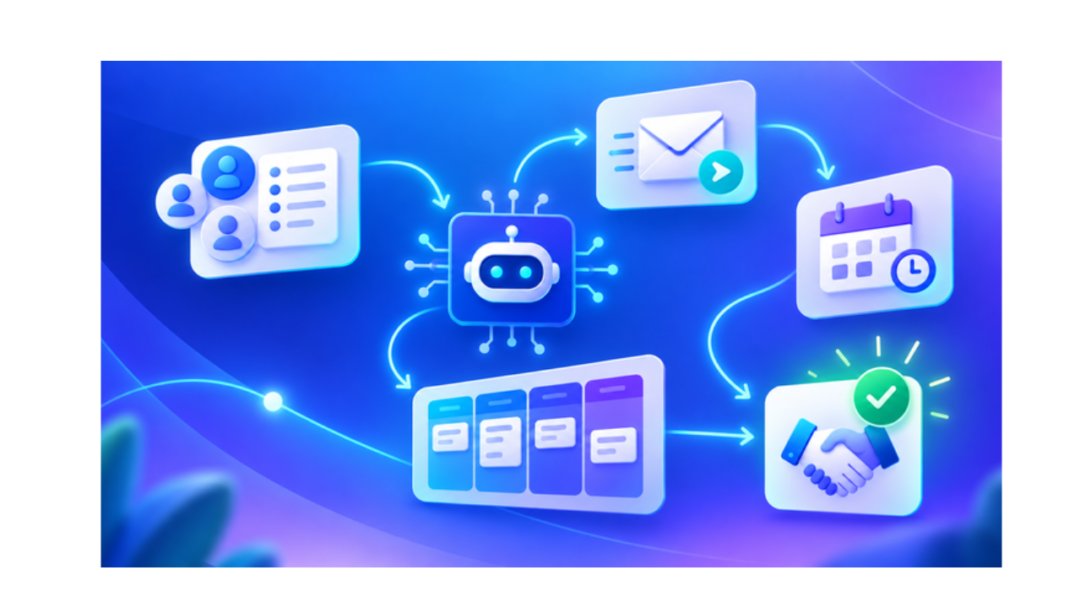
Modern sales teams juggle dozens of leads, follow-ups, and deals at once. Missing even one at the wrong moment can mean a lost sale. An AI-powered Sales CRM solves this by organizing leads, automating follow-ups, and telling reps exactly where to focus next, so deals close faster and nothing slips through the cracks.

This guide explains what an AI-powered sales CRM is, how it works, and how it helps businesses sell smarter at every stage of the pipeline.

What Is an AI-Powered Sales CRM?

An AI-powered sales CRM is a customer relationship management system that uses artificial intelligence to automate sales tasks, score leads, and recommend next actions, instead of just storing contact data.

A traditional CRM is a digital filing cabinet: it holds contact details, deal stages, and notes, but a human still has to decide what to do with that information. An AI-powered CRM goes further. It analyzes the data automatically and tells reps who to contact, when to follow up, and which deals are most likely to close.

In short: traditional CRM = storage. AI-powered CRM = storage + strategy.

Why Do Sales Teams Need an AI-Powered CRM?

Sales teams need an AI-powered CRM because manual sales processes create gaps that cost revenue. The most common problems include:

  • Scattered customer information across emails, spreadsheets, and sticky notes
  • Missed follow-ups when reps forget or run out of time
  • Manual, repetitive work like data entry and status updates
  • Difficulty spotting high-value leads among a long list of prospects

An AI-powered CRM removes these gaps by centralizing data and handling repetitive decision-making automatically.

How Does AI Improve the Sales Process?

AI improves the sales process by handling the tasks that slow reps down, so they can focus on selling. Specifically, it:

  1. Captures and organizes leads automatically from forms, emails, and website visits
  2. Scores leads based on how likely they are to convert
  3. Recommends the next best action, such as a call, email, or demo
  4. Automates follow-ups so no lead is forgotten
  5. Delivers accurate sales insights for smarter, faster decisions

The outcome is simple: less admin work, more selling time, and fewer missed opportunities.

What Are the Key Features of an AI-Powered Sales CRM?

What Are the Key Features of an AI-Powered Sales CRM?

A complete AI-powered sales CRM includes the following core features:

  • Lead management – Centralized Lead Management captures, organizes, and stores every lead the moment it comes in, ensuring no contact is lost, duplicated, or left unassigned.
  • AI lead scoring – Automatically ranks leads by their likelihood to buy, helping reps prioritize the right prospects first.
  • Sales pipeline management – Visually tracks every deal’s stage, from first contact to closed sale, so nothing gets stuck unnoticed.
  • Contact management – Strong Contact Management keeps a complete history of every customer interaction, note, and detail in one accessible profile, so reps always have full context before reaching out.
  • Workflow automation – Automates repetitive tasks like data entry, status updates, and task assignments.
  • Email tracking – Shows when prospects open, click, or reply to emails, so reps know the best time to follow up.
  • Appointment scheduling – Built-in Appointment Scheduling lets prospects book meetings directly on a rep’s calendar, removing back-and-forth emails and speeding up the path to a sales conversation.
  • Sales dashboards – Gives a real-time visual snapshot of deals, activities, and team performance.
  • Sales forecasting – Uses historical and current data to predict future revenue with greater accuracy.
  • Reports and analytics – Turns raw sales data into clear insights on performance, trends, and bottlenecks.

Together, these features cover the entire sales workflow — from the first lead to the final close.

What Are the Benefits of Using AI in Sales?

What Are the Benefits of Using AI in Sales?


Businesses that use an AI-powered CRM typically see measurable improvements, including:

  • Increased sales productivity — less time on admin, more time selling
  • Faster lead response, which improves conversion odds
  • Better lead prioritization, so reps chase the right prospects
  • Shorter sales cycles, thanks to automated reminders and nudges
  • Improved customer relationships through timely, personalized outreach
  • Higher conversion rates across the board

These gains compound over time, especially for growing teams managing a rising volume of leads.

How Does AI-Powered CRM Support Every Sales Stage?

How Does AI-Powered CRM Support Every Sales Stage?


AI adds value at every stage of the sales journey, not just at the beginning:

  • Lead capture – Automatically collects and logs new leads from every channel
  • Lead qualification – Scores and ranks leads by buying potential
  • Follow-up and nurturing – Sends timely reminders and personalized messages
  • Proposal and negotiation – Tracks deal progress and flags stalled opportunities
  • Deal closure – Highlights leads that are ready to buy right now
  • Customer retention – Monitors post-sale relationships to reduce churn

This makes the CRM a tool for the entire customer lifecycle, not just the sales pipeline.

What Are Some Practical AI-Powered CRM Use Cases?

Here’s how AI-powered CRMs are used in everyday sales work:

  • Automatically assigning new leads to the right sales rep based on territory or expertise
  • Sending personalized follow-ups triggered by customer behavior
  • Identifying inactive opportunities so reps can re-engage before deals go cold
  • Predicting deal outcomes to help reps focus effort where it matters most
  • Generating sales reports instantly, without manual data pulling

How Do You Choose the Right AI-Powered Sales CRM?

How Do You Choose the Right AI-Powered Sales CRM?


Choosing the right AI-powered sales CRM comes down to evaluating seven key factors:

  1. Ease of use – Your team should adopt it quickly without heavy training
  2. Essential sales features – Lead and pipeline management should be built in
  3. Automation capabilities – Look for tools that genuinely save time
  4. Integration options – It should connect with tools you already use
  5. Customization – The system should adapt to your sales process, not the other way around
  6. Scalability – It should grow with your team and lead volume
  7. Pricing and support – Costs and service should match your business needs

How Does GoFox Help Sales Teams Close More Deals?

How Does GoFox Help Sales Teams Close More Deals?

GoFox is an AI-powered all-in-one CRM that helps sales teams close more deals by centralizing customer data, automating repetitive tasks, and surfacing AI-driven insights in real time. Specifically, GoFox offers:

  • Centralized lead and contact information — no more scattered spreadsheets
  • Automated sales activities, including follow-ups and reminders
  • Clear pipeline visibility, so every deal’s status is always visible
  • AI-powered insights that highlight your best opportunities
  • Real-time sales reports to track performance as it happens

With GoFox, sales teams spend less time managing tools and more time closing deals.

What Are the Best Practices for Implementing a Sales CRM?

To get the most value from a sales CRM, follow these steps:

  1. Define clear sales goals before setup begins
  2. Clean and import customer data so the CRM starts accurate
  3. Customize the sales pipeline to match your actual sales process
  4. Automate repetitive tasks early to save time from day one
  5. Train your sales team so everyone uses the system consistently
  6. Monitor performance regularly and adjust as needed
How AI-Powered Sales CRM Helps Businesses Close More Deals

Conclusion

An AI-powered sales CRM does more than store contacts, it actively helps sales teams sell smarter. From lead scoring to sales forecasting, AI removes the guesswork and replaces it with clear, data-backed direction at every stage of the pipeline.

If you’re ready to simplify your sales process and close more deals, GoFox is built to help you do exactly that, with centralized data, automated workflows, and AI-powered insights all in one place.

GoFox: AI-Powered CRM for Sales, Marketing & Service

Running a business today means juggling sales, marketing, and customer service tools that often don’t talk to each other. GoFox solves that problem. It’s an AI-powered, all-in-one CRM built to manage Sales, Marketing, and Customer service from a single platform.

This guide walks through what GoFox is, what it can do, and how it helps businesses run more efficiently.

What Is GoFox?

GoFox is a CRM platform designed for Sales, marketing, and service teams to work from one shared system. At its core, GoFox is:

  • A CRM platform that organizes customer data, sales activity, and support in one place
  • An AI-powered CRM that uses artificial intelligence to support daily workflows
  • An all-in-one CRM that replaces the need for separate sales, marketing, and service tools
  • CRM software built for growth, covering everything from lead capture to customer retention

What Can You Do With GoFox?

GoFox covers three core areas of business operations: sales, marketing, and Customer Service.

Manage Sales With GoFox

Manage Sales With GoFox


GoFox gives sales teams the tools to move deals forward without losing track of details:

  • Lead Management – Automatically capture and organize new leads in one place for easier tracking and follow-up. With Lead Management, your team always knows who’s new, who’s ready to talk, and who needs a follow-up.
  • Contact Management – Store customer and contact details, conversations, deals, and activities in one organized place. Contact Management gives your team the context needed for more informed and consistent customer conversations.
  • Pipeline Management – See exactly where every deal stands at a glance, from first contact to close. Pipeline management gives your sales team a clear, visual view of what’s moving, what’s stuck, and what needs attention next.
  • Deal Management –Track deal value, stage, and next steps in one place. Deal Management keeps every opportunity organized and helps reps focus on the right actions to move deals forward.
  • Sales Automation – Free up your team’s time by automating repetitive sales tasks like follow-up emails, reminders, and status updates. Sales Automation manages repetitive sales tasks and helps reps spend more time engaging with prospects and closing deals.
  • Tasks & Activities – Stay on top of every follow-up and to-do with a clear daily view of what’s due. Tasks and activities keep your team organized and accountable, helping ensure every lead and deal receives timely attention.
  • Sales Reports & Analytics – Measure performance and identify potential issues early. Sales reports and analytics give managers a clear view of performance, helping them make informed decisions using accurate, real-time data.

Manage Marketing With GoFox

Manage Marketing With GoFox


Marketing teams can plan, run, and measure campaigns without leaving the CRM:

  • Email Marketing – Build and send targeted email campaigns to the right audience. Email Marketing helps you stay top of mind with leads and customers without extra manual work.
  • Campaign Management – Plan, organize, and manage marketing campaigns across multiple channels in one platform.
  • Marketing Automation – Automate emails, follow-ups, lead nurturing, and other repetitive marketing tasks to simplify campaign management.
  • Lead Nurturing – Engage leads with timely, relevant content throughout the buyer journey and guide them toward conversion.
  • Customer Segmentation – Group contacts based on behavior, interests, or shared characteristics to deliver more relevant and personalized messages.s it easy to send the right message to the right audience.
  • Forms & Landing Pages – Capture new leads directly through your website. Forms & landing pages turn site visitors into contacts you can follow up with.
  • Marketing Analytics – Track what’s working and what isn’t across every campaign. Marketing analytics gives your team the data to double down on what performs best.

Manage Customer Service With GoFox

Manage Customer Service With GoFox


Support teams can respond faster and keep customers happy using:

  • Ticket Management – Log, organize, and track customer issues from the initial request through resolution for efficient support management.
  • Shared Team Inbox – Manage customer conversations from one central inbox and help team members stay aligned across every interaction.
  • Free Live Chat – Engage website visitors in real time and answer their questions with immediate support.
  • Knowledge Base – Provide customers with self-service resources to find answers independently and reduce repetitive support requests.
  • SLA Management – Make sure issues are resolved on time, every time. SLA management keeps your team accountable to response and resolution deadlines customers can count on.
  • Customer Feedback – Collect input directly from customers after every interaction. Customer feedback shows you what’s working and where support needs to improve.
  • Support Analytics – Measure response times and satisfaction across your team. Support analytics helps managers spot bottlenecks and keep service quality consistently high.

How GoFox Uses AI to Improve CRM Management

GoFox is built with AI at its core, not added on as an afterthought. AI in GoFox supports:

  • AI-powered CRM capabilities across sales, marketing, and service
  • AI-assisted workflows and automation that reduce manual work
  • AI for sales, marketing, and customer service teams alike
  • AI integrations with leading providers

AI Integrations

GoFox supports multiple AI provider integrations:

  • OpenAI
  • Anthropic Claude
  • Google Gemini
  • Azure OpenAI
  • Groq
  • OpenRouter
  • Ollama
  • Custom AI

This flexibility means businesses aren’t locked into a single AI provider. They can choose the model that best fits their needs, budget, or existing infrastructure.

Connect Your Business Communication With GoFox

Customer communication happens across many channels. GoFox connects them all.

Email Integrations

  • SendGrid
  • Mailgun
  • Mandrill
  • Amazon SES
  • Mailjet
  • SparkPost
  • Brevo

SMS & Messaging Integrations

  • WhatsApp Cloud
  • Gupshup
  • Plivo
  • Sinch
  • D7 Networks
  • Other supported providers

Telephony Integrations

  • Twilio
  • Exotel
  • VOX CPaaS
  • JustCall
  • RingCentral
  • MightyCall
  • Aircall

With these integrations, every call, text, and email connects back to the same customer record.

GoFox Integrations for Your Business

Beyond communication, GoFox connects with the tools businesses already use to run day-to-day operations.

Payments & Billing

  • Razorpay
  • Stripe

Accounting

  • Xero
  • TallyPrime

E-commerce

  • Shopify

These integrations help keep financial and transactional data in sync with customer records.

How GoFox Connects the Entire Customer Lifecycle

GoFox is built to support a customer from first contact to long-term relationship. That means managing:

  • Lead generation – capturing new potential customers
  • Lead nurturing – building interest over time
  • Sales conversion – turning leads into paying customers
  • Customer communication – staying in touch across channels
  • Customer support – resolving issues quickly
  • Retention and relationship management – keeping customers engaged long-term

Why Choose GoFox as an All-in-One CRM?

Businesses choose GoFox for its unified CRM capabilities:

  • AI-powered CRM capabilities built into everyday workflows
  • Sales, marketing, and customer service in one platform
  • CRM automation that removes repetitive manual work
  • Centralized customer data accessible to every team
  • Communication integrations across email, SMS, and calls
  • Business workflow automation that keeps processes moving
  • Reporting and analytics for clear, data-backed decisions

GoFox vs. Using Multiple Business Tools

Many businesses use separate tools for sales, marketing, and service. See the comparison with GoFox:

Multiple Tools GoFox
Disconnected apps One CRM platform
Scattered customer data Centralized customer data
Manual workflows Automated workflows
Separate communication platforms Integrated communication
Multiple dashboards Unified reporting

Switching between tools costs time and creates gaps in customer data. GoFox removes that friction by keeping everything in one place.

How to Get Started With GoFox

Getting started with GoFox is straightforward:

  1. Create a GoFox account
  2. Set up your CRM with your business details
  3. Import or add contacts to start building your database
  4. Configure sales pipelines to match your sales process
  5. Set up marketing workflows for campaigns and nurturing
  6. Connect communication channels like email, SMS, and telephony
  7. Configure automation to reduce manual work
  8. Start managing customer interactions from one platform

Conclusion

GoFox is an AI-powered, all-in-one CRM built to manage the complete customer lifecycle, from the first lead to a long-term customer relationship. By bringing sales, marketing, and customer service into one platform, GoFox helps businesses stay organized, save time, and make better decisions with centralized data.

Ready to see it in action? Explore GoFox and get started today.