A visitor clicks your ad. The page opens with ten menu links, three different offers, and a long story about your company. The visitor leaves, and your ad spend goes with them.
A landing page fixes this problem. It gives each visitor one clear message and one clear action. This guide shows you how to build landing pages that convert.
What Is a Landing Page?
A landing page is a standalone web page designed for a specific marketing goal. Common goals include lead capture and sign-ups. Visitors arrive from ads, emails, or social media posts.
The page matches the message of that campaign and points to a single next step. A form collects contact details, and the lead moves to your sales team.
A homepage works differently. It introduces your whole business and sends visitors in many directions. A landing page removes those choices and points to one.
Why Are Landing Pages Important?
- Convert campaign traffic into measurable results.
- Capture visitor information through forms and other conversion points.
- Support effective lead generation campaigns.
- Increase conversions by focusing visitors on a specific goal.
- Maintain consistency between ads, landing page content, and CTAs.
- Improve campaign performance by delivering relevant messaging.
- Use Web Analytics to track visitor behavior.
- Understand how visitors scroll, click, and interact with the page.
- Identify what works and optimize areas that need improvement.
What Makes a Landing Page Convert?
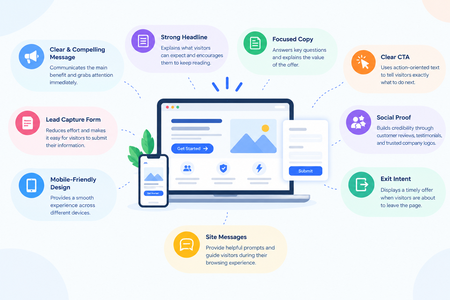
- A high-converting landing page starts with a clear and compelling message that immediately communicates the main benefit.
- The headline should clearly explain what visitors can expect and encourage them to continue reading.
- Short, focused copy should address the visitor’s key questions and explain the value of the offer.
- A clear call-to-action (CTA) with action-oriented text should tell visitors exactly what to do next.
- A simple lead capture form reduces effort and makes it easier for visitors to submit their information.
- A mobile-friendly design ensures the landing page provides a smooth experience across different devices.
- Social proof builds credibility through customer reviews, testimonials, and trusted company logos.
- Exit Intent displays an offer.
- Site Messages display website prompts.
How Is AI Changing Landing Pages?
AI landing pages use artificial intelligence to write content, suggest layouts, and personalize the page for each visitor. Drafting a page used to take days.
AI now produces headline options, body copy, and layouts in minutes, which frees your team to focus on strategy and testing.
Personalization is where AI shines. It can change the offer based on a visitor’s source, location, or past activity. A page that speaks to a visitor’s exact need feels relevant, and relevant pages convert better.
AI-powered creation brings faster production, consistent messaging across campaigns, and more room to test ideas, all of which improve your conversion opportunities.
How Do You Create a Landing Page?
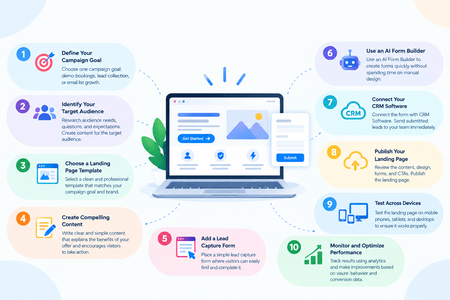
Follow these steps to create an effective landing page:
Define Your Campaign Goal: Choose one campaign goal: demo bookings, lead collection, or email list growth.
Identify Your Target Audience: Research audience needs, questions, and expectations. Create content for the target audience.
Choose a Landing Page Template: Select a clean and professional template that matches your campaign goal and brand.
Create Compelling Content: Write clear and simple content that explains the benefits of your offer and encourages visitors to take action.
Add a Lead Capture Form: Place a simple lead capture form where visitors can easily find and complete it.
Use an AI Form Builder: Use an AI Form Builder to create forms quickly without spending time on manual design.
Connect Your CRM Software: Connect the form with CRM Software. Send submitted leads to your team immediately.
Publish Your Landing Page: Review the content, design, forms, and CTAs. Publish the landing page.
Test Across Devices: Test the landing page on mobile phones, tablets, and desktops to ensure it works properly.
Monitor and Optimize Performance: Track results using analytics and make improvements based on visitor behavior and conversion data.
How Do Landing Pages Generate Leads?
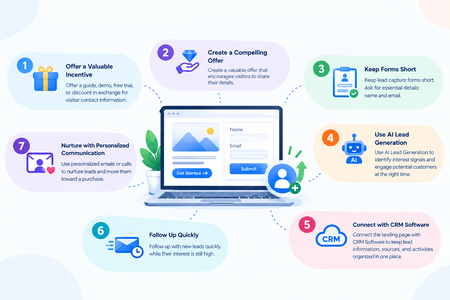
- Offer a guide, demo, free trial, or discount in exchange for visitor contact information.
- Create an offer that provides enough value to make visitors comfortable sharing their details.
- Keep lead capture forms short. Ask for essential details: name and email.
- Use AI Lead Generation to identify interest signals and engage potential customers at the right time.
- Connect the landing page with CRM Software to keep lead information, sources, and activities organized in one place.
- Follow up with new leads quickly. Respond to New Leads Quickly.
- Use personalized emails or calls to nurture leads and move them toward a purchase.
How Can You Improve Landing Page Conversions?
Improve conversions with clear, concise, relevant landing pages. Write benefit-focused CTAs. Remove unnecessary form fields. Personalize the experience for each audience. Match the offer to the visitor.
Engagement campaigns recover lost visitors. Exit Intent campaigns display targeted messages. Push Notifications bring visitors back to the website. Site Messages answer visitor questions.
Testing improves conversion rates. Test one page element at a time. Test the headline, button color, or main image. Compare test results. Small improvements can increase conversions without additional traffic.
How Do You Track Landing Page Performance?
Track landing page performance with a few core metrics that show how visitors behave and how many take action. Traffic and visitor behavior tell you where people come from and what they do on the page. Conversion rate shows the share of visitors who complete your goal. Bounce rate reveals how many leave without doing anything, which often points to a weak headline or a slow page. Form submissions count the leads you captured.
CRM Analytics tracks lead activity and customer activity after form submission. It identifies pages that generate leads and customers. Web Analytics tracks visitor engagement on the landing page. CRM Analytics tracks post-conversion activity. Web Analytics tracks page-level activity.
What Are Landing Page Best Practices?
- Keep the landing page design simple, clean, and focused.
- Build the page around one clear conversion goal.
- Make the CTA prominent and easy to find.
- Optimize the landing page for mobile devices.
- Use short and simple forms to encourage more submissions.
- Add relevant visuals that support the main message.
- Include testimonials, reviews, and customer logos as trust signals.
- Review landing page performance regularly.
- Use data and visitor behavior to identify areas for improvement.
- Continuously test and optimize the page to improve conversions.
What Landing Page Mistakes Should You Avoid?
The most common mistake is giving visitors too many choices. Too many CTAs split attention, and complicated forms push people away.
Unclear messaging confuses visitors. Slow-loading pages reduce engagement. Poor mobile optimization reduces traffic.
Other mistakes hide in the background. Pages without analytics can’t improve. Pages without Exit Intent miss the chance to engage leaving visitors.
Missing CRM software integration delays lead follow-up. Delayed follow-up reduces lead engagement.
Conclusion
Landing pages turn clicks into conversations. A focused page, a short form, and a strong CTA encourage visitor action. AI-powered landing page creation speeds up page development. AI Lead Generation supports personalized lead engagement. Exit Intent captures leaving visitors. Push Notifications re-engage visitors. Site Messages provide visitor prompts. CRM Analytics tracks lead activity. Web Analytics tracks page performance.
GoFox is an AI-powered all-in-one CRM platform that brings sales, marketing, and customer service into one place.
Turn Every Visitor Into a Lead. Start building smarter landing pages with GoFox
