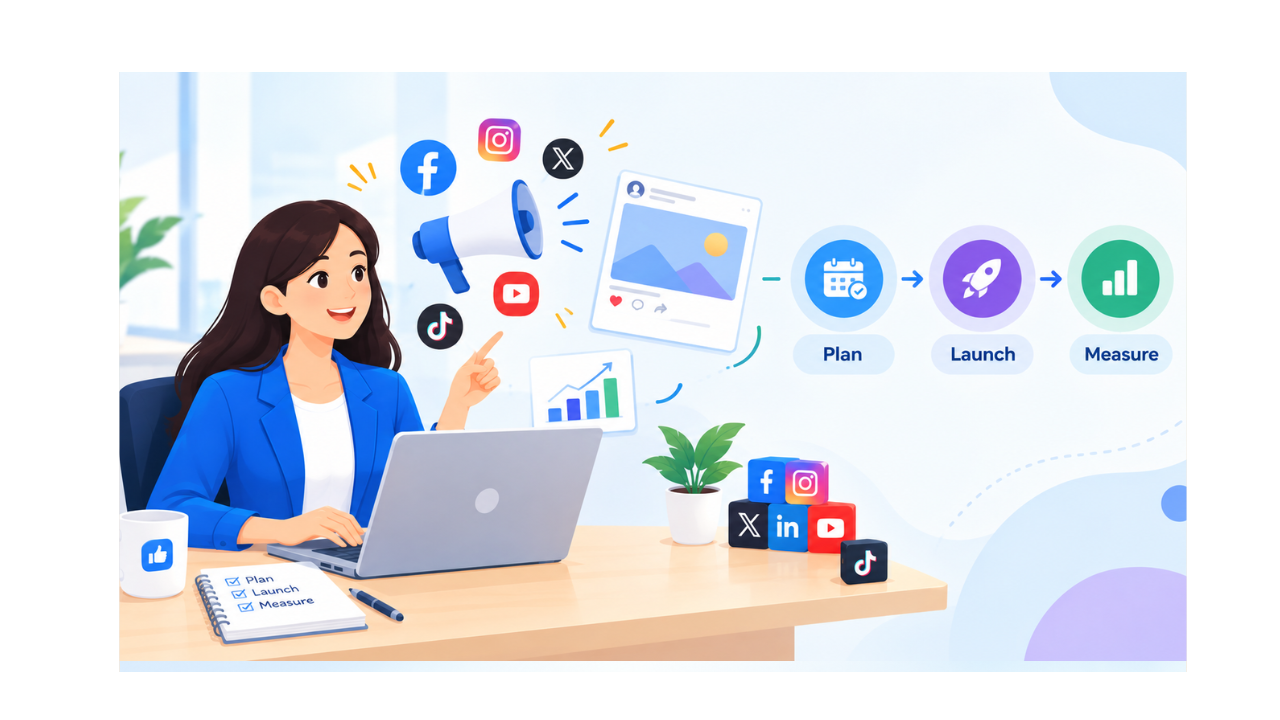
A single post gets a few likes and disappears. Social media campaigns build momentum for weeks, pull in new followers, and turn viewers into customers. The difference lies in planning, not luck. This guide walks through building a social media campaign that delivers real results.
What Is a Social Media Campaign?
A social media campaign is a coordinated set of posts built around one goal, timeline, and message.
Regular posts share updates on their own. A campaign ties multiple posts together across days or weeks, all pointing toward a single outcome. Each post plays a role in a bigger story.
Campaigns sit at the center of digital marketing. They give brands a structured way to launch products, promote sales, or grow their audience with a clear beginning and end.
A social CRM can help businesses manage customer interactions, track social conversations, and connect campaign engagement with customer relationships.
Why Are Social Media Campaigns Important?
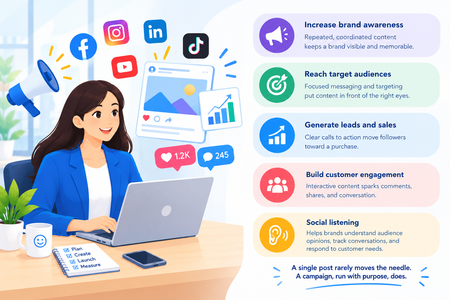
Campaigns build awareness, reach target audiences, and generate sales.
- Increase brand awareness: Repeated, coordinated content keeps a brand visible and memorable.
- Reach target audiences: Focused messaging and targeting put content in front of the right eyes.
- Generate leads and sales: Clear calls to action move followers toward a purchase.
- Build customer engagement: Interactive content sparks comments, shares, and conversation.
- Social listening: helps brands understand audience opinions, track conversations, and respond to customer needs.
A single post rarely moves the needle. A campaign, run with purpose, does.
How Do You Set Social Media Campaign Goals?
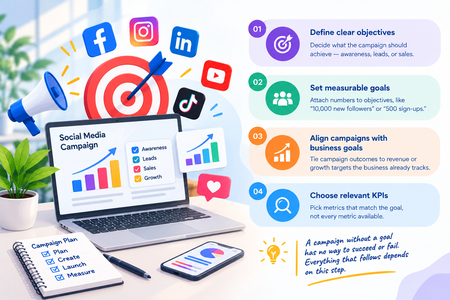
Set goals by defining clear objectives, measurable targets, and KPIs tied to business outcomes.
- Define clear objectives: Decide what the campaign should achieve — awareness, leads, or sales.
- Set measurable goals: Attach numbers to objectives, like “10,000 new followers” or “500 sign-ups.”
- Align campaigns with business goals: Tie campaign outcomes to revenue or growth targets the business already tracks.
- Choose relevant KPIs: Pick metrics that match the goal, not every metric available.
A campaign without a goal has no way to succeed or fail. Everything that follows depends on this step.
How Do You Identify Your Target Audience?
Identify your audience by studying demographics, interests, behaviors, and the platforms they use.
- Understand customer demographics: Age, location, income, and job roles shape what content resonates.
- Identify interests and behaviors: Know what your audience follows, buys, and shares.
- Create audience personas: Build simple profiles that represent your core customer types.
- Platform selection: Identify the platforms used by your target audience.
A campaign built for everyone speaks to no one. Narrow focus produces stronger results.
How Do You Choose the Right Social Media Platforms?
Choose platforms based on where your audience spends time and what content formats fit your message.
- Facebook: Strong for community building and detailed targeting across a wide age range.
- Instagram: Built for visual storytelling, reels, and product discovery.
- LinkedIn: Best for B2B campaigns, professional audiences, and thought leadership.
- YouTube: Suited for long-form video and tutorials that build trust over time.
- TikTok and other platforms: Great for short, fast content aimed at younger, highly active audiences.
How Do You Create a Social Media Campaign Strategy?
Build a strategy by defining messaging, planning content, setting a calendar, and fixing a budget and timeline.
- Define campaign messaging: Settle on one core message every post supports.
- Plan content formats: Mix images, video, and text based on platform and goal.
- Content calendar: Plan post topics, formats, and publishing dates.
- Campaign timelines and budgets: Set the start date, end date, and spending limit.
A strategy turns scattered ideas into a plan the whole team can follow.
How Do You Create Engaging Campaign Content?
Create engaging content with strong visuals, short-form video, clear captions, and consistent branding.
- Images and videos: High-quality visuals stop the scroll and hold attention.
- Reels and short-form content: Quick, punchy videos can increase reach and engagement across social platforms.
- Captions and calls to action: Every caption should guide the viewer toward the next step.
- User-generated content: Real customers sharing real experiences build trust and credibility.
- Consistent brand messaging: Colors, tone, and voice should match across every post in the campaign.
Content that looks and sounds consistent everywhere builds recognition over time. A social suite can help manage content, publishing, and campaign activities across multiple social platforms.
How Do You Launch and Promote a Social Media Campaign?
Launch a campaign through organic posts, paid ads, influencer partnerships, hashtags, and active optimization.
- Organic promotion: Share posts naturally across owned channels to build early traction.
- Paid social media advertising: Boost reach with targeted ad spend behind top-performing content.
- Influencer collaborations: Partner with voices your audience already trusts.
- Hashtags and social sharing: Use relevant hashtags to extend reach beyond your existing followers.
- Campaign optimization: Social media management tools. Monitor performance. Manage content. Adjust targeting. Update creative.
The first 48 hours often set the tone for the rest of the campaign. Stay close to the numbers early.
How Do You Measure Social Media Campaign Performance?
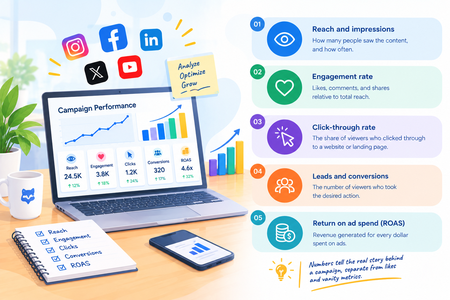
Measure performance with reach, engagement rate, click-through rate, conversions, and return on ad spend.
- Reach and impressions: How many people saw the content, and how often.
- Engagement rate: Likes, comments, and shares relative to total reach.
- Click-through rate: The share of viewers who clicked through to a website or landing page.
- Leads and conversions: The number of viewers who took the desired action.
- Return on ad spend (ROAS): Revenue generated for every dollar spent on ads.
Numbers tell the real story behind a campaign, separate from likes and vanity metrics.
What Are the Best Practices to Improve Campaign Results?
Improve results by testing content, tracking performance, using audience data, and refining future campaigns.
- Test different content and creatives: Run A/B tests on images, captions, and formats.
- Monitor performance regularly: Check your metrics daily or weekly throughout the campaign.
- Use audience insights: Let real engagement data guide future targeting and content choices.
- Optimize underperforming campaigns: Pause, adjust, or replace content that isn’t working.
- Analyze results and improve future campaigns: Turn each campaign into a lesson for the next one.
Campaigns that improve over time beat campaigns that stay static.

Conclusion
A successful social media campaign starts with a clear goal and ends with measurable results. Strategic planning, audience targeting, engaging content, and continuous testing help turn social media efforts into meaningful business growth.
Ready to simplify your marketing efforts? Explore GoFox today and manage your customer growth from one powerful platform.
