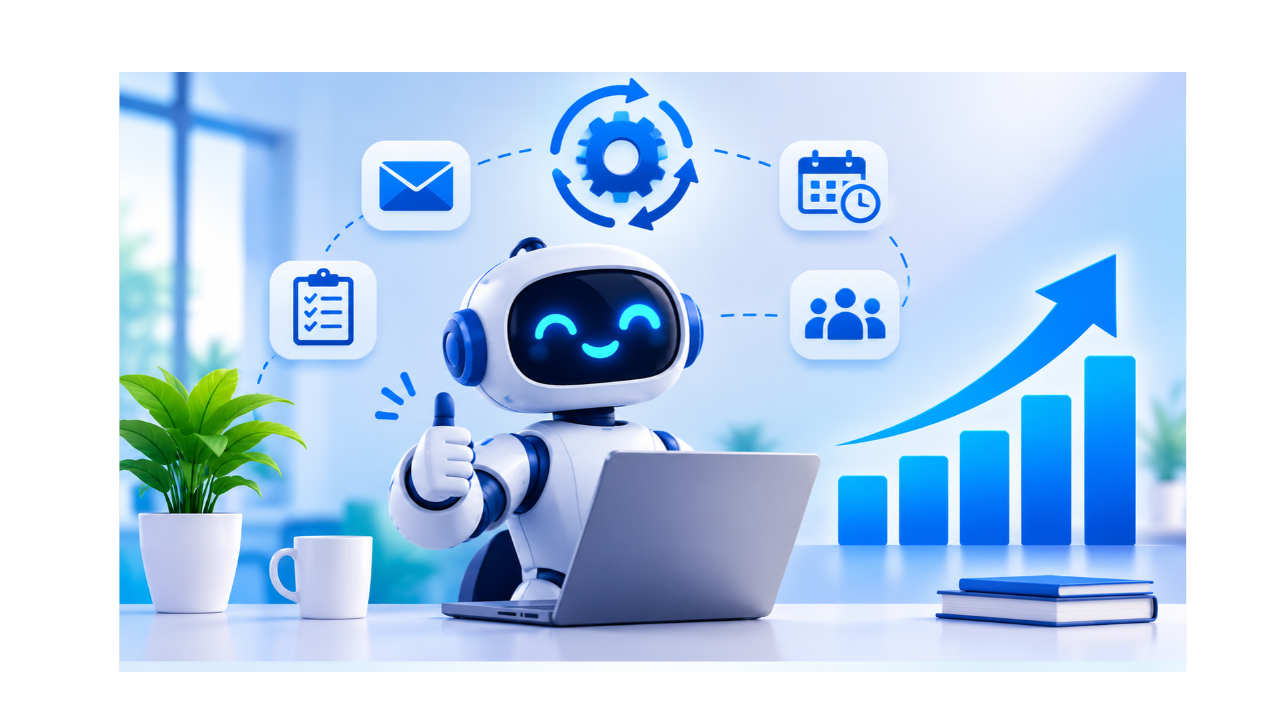
Businesses can automate repetitive tasks, manage customer inquiries, and organize sales activities with minimal manual effort.
AI-powered automation makes this possible by simplifying daily operations through intelligent workflows, automated Appointment Booking, AI Sales Workflows, AI Email Templates, and invoice management.
It helps businesses save time, improve productivity, and manage operations more efficiently.
What Is AI-Powered Automation?
AI-powered automation refers to the use of artificial intelligence technologies to perform tasks, analyze information, and manage business processes with minimal human involvement.
Traditional automation follows predefined rules to complete specific activities. AI-powered automation can understand information, recognize patterns, analyze customer behavior, and generate responses based on available data.
An AI-powered customer support system understands incoming questions, finds relevant information, and prepares suitable responses. An automated sales system analyzes customer interactions and identifies potential sales opportunities.
Common applications include:
- Customer inquiry management.
- Automated email communication.
- Appointment scheduling and reminders.
- Sales activity management.
- Invoice generation and processing.
- Customer data organization.
- Business reporting and analytics.
- Task assignment and workflow management.
These applications help organizations manage everyday responsibilities through intelligent software.
How Does AI-Powered Automation Work?
AI-powered automation uses artificial intelligence, business data, and automated instructions to perform tasks. It analyzes information, recognizes patterns, and executes configured activities.
- Data Collection: AI systems collect information from customer records, databases, websites, emails, and connected business applications.
- Data Processing: The collected information is organized and prepared for analysis. This helps AI systems identify relevant details and relationships.
- Pattern Recognition: Machine learning algorithms examine information to recognize customer behavior, repeated activities, and business trends.
- Decision Support: AI models generate predictions, recommendations, and responses using the available information.
- Task Execution: Automation software updates contact records, sends emails, schedules appointments, and generates invoices.
- Performance Monitoring: Businesses monitor automated activities to identify errors, examine results, and maintain accurate processes.
An automated booking system collects customer details, displays available time slots, confirms appointments, and sends booking reminders through selected communication channels.
Key Technologies Behind AI-Powered Automation
Several technologies support AI-powered automation. Each technology performs different functions within business applications.
- Machine Learning (ML): Machine learning allows computer systems to recognize patterns in data and make predictions. Businesses use it for customer segmentation, sales forecasting, demand analysis, and fraud detection.
- Natural Language Processing (NLP): NLP helps computers understand and interpret human language. It supports AI chatbots, email classification, sentiment analysis, and customer communication.
- Generative AI: Generative AI creates content based on instructions and available information. Businesses use it to prepare email drafts, summarize documents, generate product descriptions, and create marketing content.
- Robotic Process Automation (RPA): RPA uses software bots to perform repetitive, rule-based activities. Examples include data entry, invoice processing, spreadsheet updates, and document transfers.
- Predictive Analytics: Predictive analytics examines historical and current information to estimate future outcomes. Sales teams can use these insights to evaluate opportunities, forecast revenue, and understand customer behavior.
Benefits of AI-Powered Automation for Businesses
AI-powered automation helps organizations manage resources, employee responsibilities, and everyday operations. Its applications support several areas of business productivity.
- Increased Productivity: Automated systems handle repetitive activities, allowing employees to focus on planning, customer relationships, and important business responsibilities.
- Reduced Manual Work: AI tools can manage data entry, email classification, appointment scheduling, and routine administrative activities.
- Improved Accuracy: Automated processes help reduce common errors in calculations, information processing, customer records, and invoice preparation.
- Better Time Management: Appointment scheduling, task assignments, and automated reminders help employees organize their daily schedules.
- Improved Customer Communication: AI chatbots and automated email systems help businesses respond to customer inquiries and maintain regular communication.
- Organized Business Operations: Automated workflows help teams manage sales activities, customer information, appointments, and financial records.
- Consistent Processes: Configured automation systems follow established instructions, helping businesses maintain consistent operations.
How AI-Powered Automation Improves Business Productivity
Business productivity depends on effective time management, organized responsibilities, and efficient use of resources. AI-powered automation supports these areas through intelligent software and connected workflows.
- Automating Repetitive Activities: Data entry, email sorting, appointment scheduling, and document management require considerable employee time. AI-powered systems can handle many of these activities automatically.
- Simplifying Appointment Booking: An Appointment Booking system allows customers to select available dates and time slots without continuous communication with employees. Automated confirmations and reminders help businesses manage schedules and reduce missed appointments.
- Managing Business Tasks: AI-powered task management tools organize assignments, monitor deadlines, and provide notifications. Employees can understand their responsibilities and track ongoing activities.
- Improving Team Communication: AI tools can summarize conversations, prepare meeting notes, and organize important information. Teams can access relevant updates without reviewing lengthy communication histories.
- Supporting Business Decisions: AI analytics systems examine business data and identify patterns. Managers can use these insights to understand operational performance, employee workloads, and customer activity.
Common Business Processes That Can Be Automated with AI
AI-powered automation supports several business departments. Organizations can use intelligent software to manage routine responsibilities and maintain organized records.
- Customer Service: AI chatbots answer common questions, classify support requests, and collect customer information.
- Sales Management: AI tools analyze customer details, identify potential leads, and monitor sales activities.
- Marketing: Automated systems support audience segmentation, email campaigns, content creation, and campaign reporting.
- Human Resources: AI applications assist with resume screening, interview scheduling, employee onboarding, and internal communication.
- Finance and Accounting: Automation supports expense classification, invoice preparation, payment tracking, and financial reporting.
- Appointment Management: Booking systems manage schedules, available time slots, confirmations, and reminders.
- Document Management: AI extracts information, organizes files, summarizes documents, and supports document searches.
- Project Management: Automated tools organize tasks, track deadlines, and monitor project activities.
- Invoices support automated billing and financial management. Businesses can generate invoices, organize customer billing details, calculate amounts, and maintain financial records with minimal manual effort.
AI-Powered Automation in Sales and Marketing
Sales and marketing teams manage customer information, communication, lead records, and campaign activities. AI-powered automation helps organize these responsibilities through connected applications.
AI Sales Workflows
AI Sales Workflows help businesses organize sales activities through automated steps and predefined conditions. These workflows can support lead assignments, follow-up reminders, customer updates, and deal management.
An inquiry form submission triggers automatic lead assignment, follow-up task creation, and employee notification within the sales workflow.
AI Sales Automations
AI Sales Automations handle lead management, customer communication, sales notifications, and opportunity tracking through automated processes.
Sales teams can use automation to:
- Assign incoming leads to sales representatives.
- Create follow-up reminders.
- Update customer records.
- Monitor deal activities.
- Notify employees about important sales updates.
- Organize customer communication.
AI Email Templates
AI Email Templates help employees create professional email drafts for sales inquiries, appointment confirmations, customer follow-ups, product information, and support communication using AI-generated content.
Employees can personalize the generated content with customer names, business information, and relevant details.
Customer Relationship Management
AI-powered CRM systems organize customer records, track interactions, manage sales opportunities, and maintain communication histories. Sales representatives can access customer information from a centralized platform.
Sales Forecasting
AI examines historical sales records, pipeline activities, and customer trends to estimate future revenue. Managers can use these insights to understand sales performance and prepare business plans.
Challenges of Implementing AI-Powered Automation
AI-powered automation depends on suitable technology, accurate information, and effective management. Organizations face several implementation challenges.
Data Privacy and Security: AI applications may process confidential business information and customer records. Organizations need appropriate security controls and data protection practices.
Implementation Costs: AI software, infrastructure, system integration, and employee training require financial resources.
Technical Complexity: Some AI applications require technical knowledge, specialized configuration, and ongoing maintenance.
Data Quality: Incomplete, inaccurate, or outdated information can affect AI predictions and automated results.
Employee Training: Employees need to understand how AI applications work and how automated processes affect their responsibilities.
Human Supervision: AI systems can generate inaccurate responses or misunderstand certain situations. Human review remains important for sensitive business activities.
System Integration: Connecting AI applications with existing CRM, accounting, communication, and project management systems may require additional configuration.
Best Practices for Implementing AI Automation in Business
Organizations need suitable tools, accurate data, and clear guidelines to implement AI-powered automation successfully.
- Identify Repetitive Activities: Examine daily operations and identify tasks that require significant manual effort.
- Define Business Objectives: Establish measurable goals related to productivity, accuracy, customer communication, and workflow management.
- Select Suitable AI Tools: Choose software that matches business requirements, available resources, and existing applications.
- Maintain Accurate Data: Keep customer records, financial information, and business documents organized and updated.
- Train Employees: Provide practical training on AI applications, automated workflows, and information management.
- Start with Simple Processes: Use automation for appointment reminders, email notifications, and data entry.
- Monitor Performance: Examine processing time, error rates, workflow completion, and employee feedback.
- Maintain Human Oversight: Establish review procedures for important decisions, financial records, and sensitive customer information.
Organizations can use these practices to maintain control over automated activities and measure their operational performance.
The Future of AI-Powered Automation in Business
AI-powered automation continues to develop as machine learning, generative AI, predictive analytics, and intelligent agents become more advanced.
AI agents can understand instructions, interact with connected applications, and perform multiple related activities. Businesses may use these systems to manage customer inquiries, organize sales information, prepare reports, and coordinate workflows.
Generative AI is expanding its role in business communication, content creation, and document management. Employees can use AI applications to prepare emails, summarize reports, organize information, and generate ideas.
Predictive technologies can examine customer behavior, sales patterns, and operational data. These capabilities support business planning and resource management.
Automated CRM systems are expected to include more intelligent features for lead management, customer communication, sales forecasting, and workflow coordination. Appointment Booking, AI Sales Workflows, AI Sales Automations, and AI Email Templates represent practical applications of these technologies.
Human expertise remains essential in business operations. Employees provide creativity, judgment, communication, and strategic direction. AI-powered automation can support these responsibilities by managing routine activities and organizing business information.